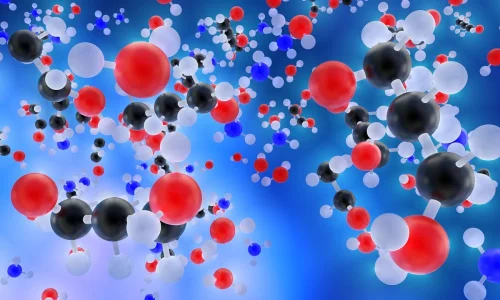
How Is The Bond Created? When two amino acids form a covalent bond, it creates a peptide bond.[1] The Carboxyl group of one amino acid may react with the second amino group of the other amino acid. This essentially forms a peptide bond. Due to this process, a molecule (amide) filled…
How Is The Bond Created? When two amino acids form a covalent bond, it creates a peptide bond.[1] The Carboxyl group of one amino acid may react with the second amino group of the other amino acid. This essentially forms a peptide bond. Due to this process, a molecule (amide) filled…
How Is The Bond Created? When two amino acids form a covalent bond, it creates a peptide bond.[1] The Carboxyl group of one amino acid may react with the second amino group of the other amino acid. This essentially forms a peptide bond. Due to this process, a molecule (amide) filled…
How Is The Bond Created? When two amino acids form a covalent bond, it creates a peptide bond.[1] The Carboxyl group of one amino acid may react with the second amino group of the other amino acid. This essentially forms a peptide bond. Due to this process, a molecule (amide) filled…
How Is The Bond Created? When two amino acids form a covalent bond, it creates a peptide bond.[1] The Carboxyl group of one amino acid may react with the second amino group of the other amino acid. This essentially forms a peptide bond. Due to this process, a molecule (amide) filled…